Services
Frequency Specific Microcurrent (FSM)
Advanced neuromodulation that supports the nervous system at the cellular level—offered in Kailua, Hawaii.
Advanced Neuromodulation in Psychiatry: Bridging Modern Brain Stimulation Modalities
In recent years, therapies that use gentle electrical signals to support the brain and nervous system have entered mainstream medicine. You may already be familiar with non-invasive, FDA-cleared modalities such as:
- Vagus Nerve Stimulation (VNS) and Cranial Electrotherapy Stimulation (CES), which use targeted current to regulate mood, reduce anxiety, and balance autonomic nervous system activity.
- Transcranial Direct Current Stimulation (tDCS), which modulates cortical neural activity to improve cognitive functioning and mood disorders.
- Transcutaneous Electrical Nerve Stimulation (TENS), commonly used in physical therapy to temporarily block pain perception at the spinal cord level.
Frequency Specific Microcurrent (FSM) belongs to this family of bioelectrical modalities, but it operates on a fundamentally different cellular level. While traditional therapies like TENS deliver higher electrical currents in the milliampere range to block pain signals, microcurrent uses sub-sensory currents measured in millionths of an ampere (microamperes).3 Because this current is 1,000 times lower than TENS, it matches the natural electrical intensity already generated inside human cells.3
What is Frequency Specific Microcurrent (FSM)?
Every tissue and cell in your body relies on delicate bioelectric signals to communicate and function. When tissue experiences trauma, chronic stress, or neuro-inflammation, its electrical resistance shifts and normal cellular signaling is disrupted.2
Microcurrent therapy restores this natural current flow. Research demonstrates that microamperage currents can:
- Increase Cellular Energy (ATP): Microcurrent has been shown to increase intracellular adenosine triphosphate (ATP)—the primary fuel source for cells—by 300% to 500%.1
- Support Cell Repair: Microcurrent enhances amino acid transport and protein synthesis, giving cells the resources needed to heal and regain normal function.1
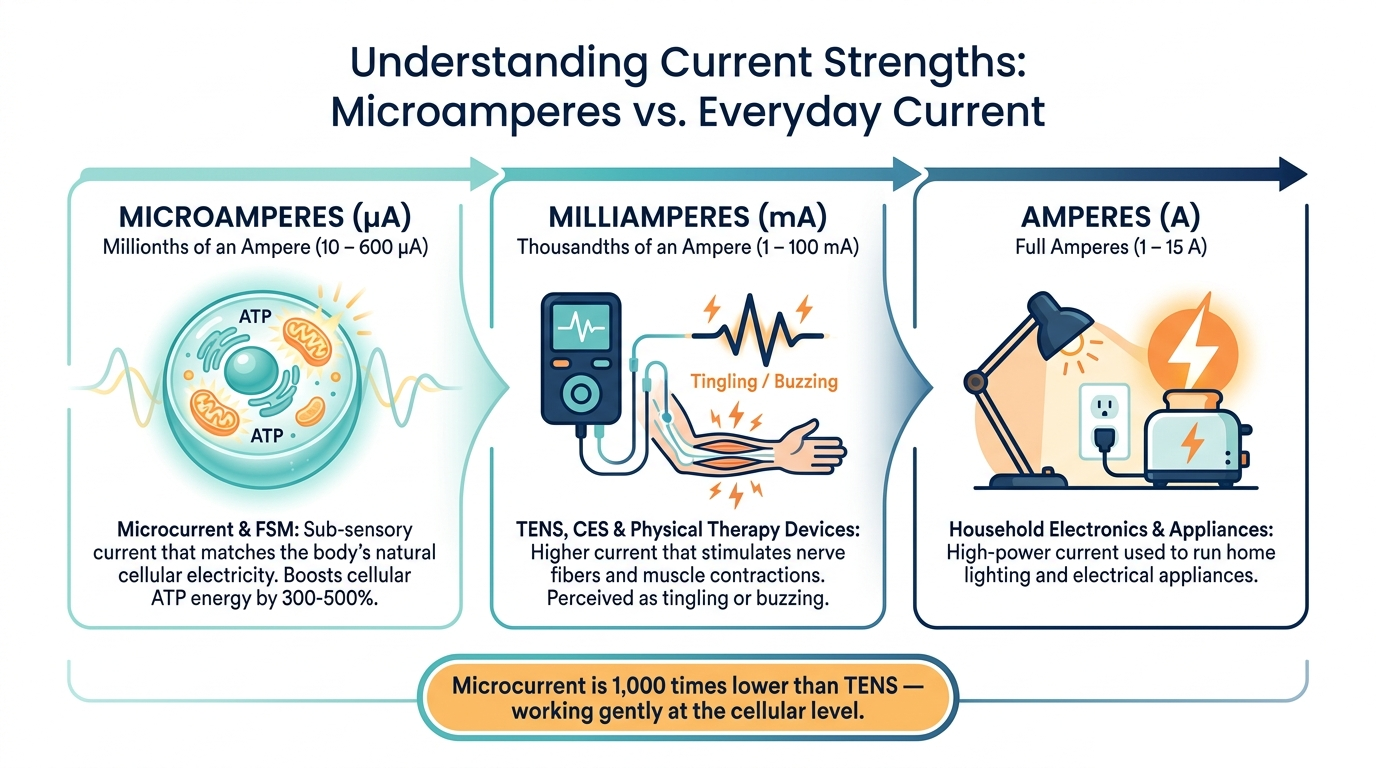
Microcurrent is roughly 1,000 times lower than TENS—working gently at the cellular level.
The Power of Two Channels: Biological Resonance
What makes FSM unique is its two-channel delivery system, which relies on the principle of biological resonance.2 FSM delivers two distinct frequencies simultaneously through gentle skin contacts or damp towels:
- Channel A targets the specific condition or pathology (for example, inflammation, overactivity, or scar tissue).2
- Channel B targets the specific tissue being addressed (such as a nerve, the spinal cord, the brain/medulla, or the vagus nerve).2
Just as a specific radio frequency tunes into a single station, or a specific musical pitch causes a matching tuning fork to vibrate, FSM frequencies match the resonant properties of target tissues to help restore balance and disrupt dysfunctional signaling patterns.2
How FSM Supports the Nervous System, Vagal Tone, & HRV
Regulating the Autonomic Nervous System & Heart Rate Variability (HRV)
Under conditions of chronic psychological stress, physical trauma, or emotional distress, the autonomic nervous system gets locked into a hyperactive sympathetic (“fight-or-flight”) state.2,6 This suppresses the vagus nerve—the central highway of your parasympathetic (“rest-and-digest”) system—leading to poor stress resilience, elevated anxiety, and reduced Heart Rate Variability (HRV).6
FSM protocols designed for autonomic regulation help calm sympathetic hyperarousal and restore parasympathetic tone.2,6 Clinical trials and physiological studies show that FSM therapy can:
- Rapidly reduce perceived stress and muscle tension by rebalancing autonomic nervous system output.2,4
- Enhance vagal nerve stimulation and function, supporting healthy HRV and autonomic recovery.6
- Induce a palpable state of deep physical tissue relaxation and warmth, signaling that the nervous system has shifted out of protective guarding.2
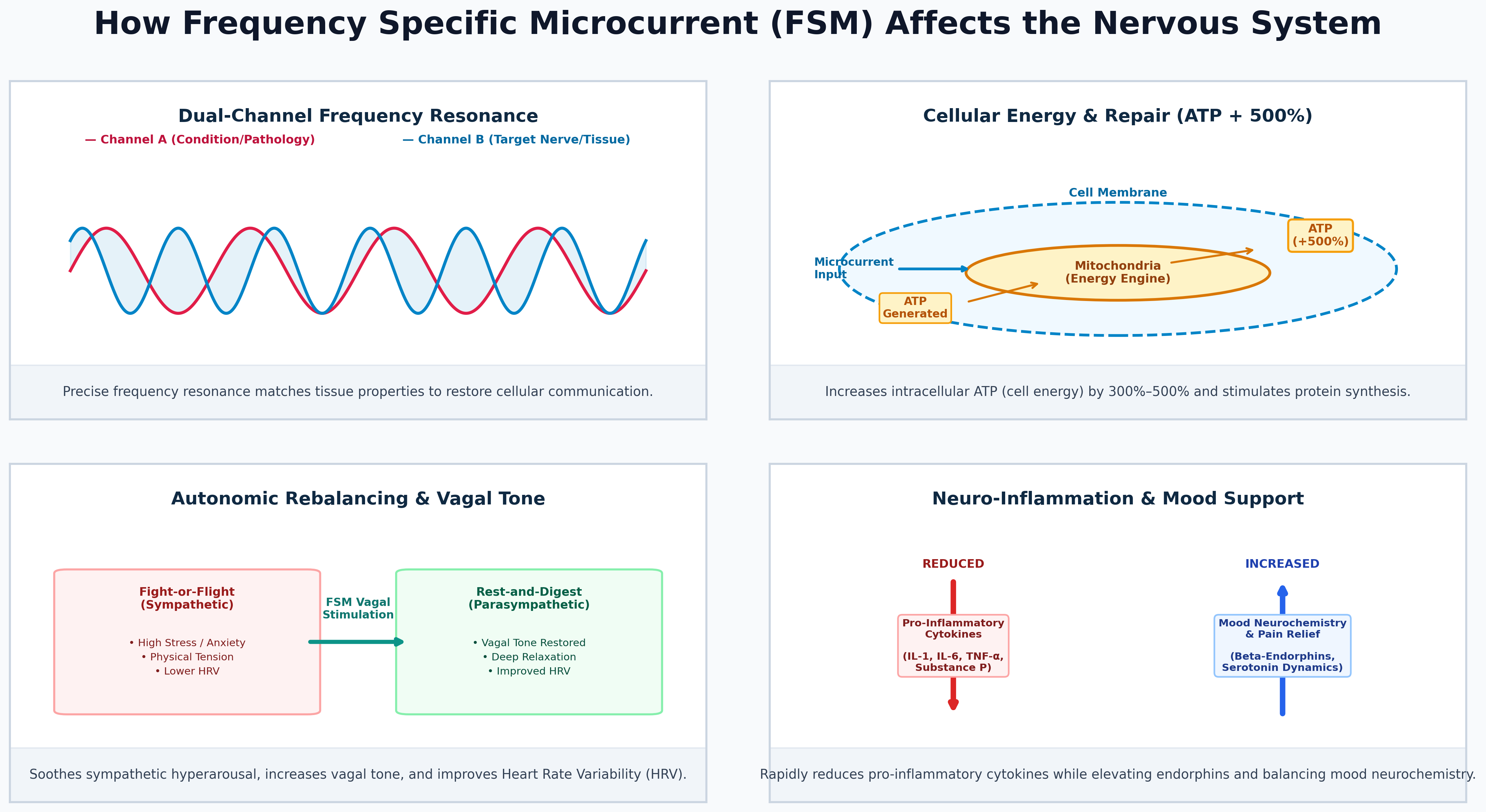
FSM is thought to work through several complementary mechanisms—from cellular energy production to autonomic rebalancing.
Quelling Neuro-Inflammation & Balancing Brain Chemistry
Chronic emotional stress and trauma increase inflammatory markers across both the body and brain.5,6 When neuro-inflammation rises, nerve conduction slows down, neurotransmitter production (such as serotonin and dopamine) is compromised, and emotional processing becomes disrupted.6
In clinical research measuring biological markers during microcurrent care, specific FSM protocols produced rapid reductions in key pro-inflammatory cytokines—including Interleukin-1 (IL-1), Interleukin-6 (IL-6), Tumor Necrosis Factor-alpha (TNF-alpha), and Substance P.5 Simultaneously, treatments produced significant increases in beta-endorphins (the body’s natural mood-elevating neuropeptides) and helped normalize cortisol and serotonin dynamics.5
Applications in Mental Health, PTSD, & Stress Recovery
In our psychiatric practice, FSM is utilized as a supportive neuromodulatory tool for several mental health concerns:
1. Stress, Anxiety, & Somatic Distress
Recent clinical randomized controlled trials demonstrate that FSM therapy significantly reduces somatic symptoms (such as physical tension, fatigue, and stress-related discomfort) and negative emotional states compared to traditional relaxation techniques alone.4 Patients receiving FSM report earlier and sustained improvements in life satisfaction, emotional regulation, and perceived stress resilience.4
2. Post-Traumatic Stress Disorder (PTSD) & Trauma Recovery
In PTSD and severe emotional trauma, the limbic system (specifically the amygdala and hippocampus) becomes hyper-sensitized to perceive threats constantly, overwhelming the executive control of the prefrontal cortex.6 Specific FSM protocols are designed to:
- Quiet limbic hyperreactivity and calm central nervous system sensitization.6,7
- Help interrupt chronic neuro-endocrine stress loops and reduce intrusion/hyperarousal symptoms.6
- Support executive functioning, decision-making, and memory consolidation.6,7
3. Clearing “Brain Fog” & Mental Sluggishness
Trauma, chronic illness, and neuro-inflammation frequently present as cognitive sluggishness or impaired concentration.6,7 In military health case series and clinical reports, targeted brain protocols delivered noticeable improvements in mental clarity, memory retrieval, and focus.7
What to Expect During an FSM Treatment
- Painless & Sub-sensory: Because microcurrent currents operate at physiological levels, most patients feel no painful electrical sensation.3 You may feel a mild, pleasant tingling or simply nothing at all.
- Comfortable & Relaxing: Sessions are conducted while you rest comfortably. Current is delivered using warm, damp towels or small adhesive patches placed on targeted areas.2
- Immediate Sense of Calm: During treatment, as endorphins release and sympathetic drive decreases, patients frequently report a soothing feeling of deep physical relaxation or quiet restfulness.2,5
A Realistic, Hopeful Approach to Your Healing
It is important to understand that FSM is not a magic cure or a standalone replacement for comprehensive psychiatric care. Rather, it is an innovative, evidence-informed adjunctive modality.4,6,9
While a growing body of peer-reviewed pilot studies and clinical trials supports FSM’s ability to soothe the nervous system and lower somatic distress, individual responses vary based on your unique health history, hydration, and medical conditions.2,4 We view FSM as an empowering piece of an integrative mental health plan—working synergistically alongside psychotherapy, psychiatric evaluation, lifestyle modifications, and mind-body care to help your nervous system regain its natural balance.4,6
Key Practices to Increase the Effectiveness of FSM
In order for the body to be able to respond effectively to microcurrent, it is important that you are adequately hydrated. This means drinking approximately 64oz of clean water daily, especially on the day of your treatment. Restore Mental Health recommends spring water or reverse osmosis water that has been remineralized—please speak to the clinic about recommended remineralizing products. Minerals and water are required for the conduction of electrical current in the body.
For the effects of microcurrent to make lasting changes, lifestyle improvements, changes to your environment, and treatment of any acute causes of your condition must be combined with FSM. The clinic will educate you on how to best address these issues together with the use of FSM to provide lasting, sustainable changes.
References
- Cheng, N., Van Hoof, H., Bockx, E., Hoogmartens, M. J., Mulier, J. C., De Dijcker, F. J., et al. (1982). The effects of electric currents on ATP generation, protein synthesis, and membrane transport in rat skin. Clinical Orthopaedics and Related Research, (171), 264–272.
- McMakin, C. R., & Oschman, J. L. (2013). Visceral and somatic disorders: tissue softening with frequency-specific microcurrent. Journal of Bodywork and Movement Therapies, 17(4), 519–527.
- McMakin, C. R. (2010). Nonpharmacologic treatment of neuropathic pain using Frequency Specific Microcurrent. The Pain Practitioner, 20(3), 68–73.
- Pereira, M. G., Machado, A. M., Vilaça, M., Faria, S., Monteiro, I., & Santos, M. (2025). Effectiveness of Frequency-Specific Microcurrent (FSM) Therapy and Relaxation in Adults with Distress: A Pilot Randomized Controlled Trial. Healthcare, 13(10), 1151.
- McMakin, C. R., Gregory, W. M., & Phillips, T. M. (2005). Cytokine changes with microcurrent treatment of fibromyalgia associated with cervical spine trauma. Journal of Bodywork and Movement Therapies, 9(3), 169–176.
- McMakin, C. R. (2020). Mental Health, the Brain, and PTSD: Frequency Specific Microcurrent Applications. Townsend Letter, 54–57.
- Sharp, S. J., Huynh, M. T., & Filart, R. (2019). Frequency-Specific Microcurrent as Adjunctive Therapy for Three Wounded Warriors. Medical Acupuncture, 31(3), 189–192.
- Stösslein, B. A. C., & Kuypers, K. P. C. (2022). Self-Rated Recovery and Mood Before and After Resistance Training and Muscle Microcurrent Application. Frontiers in Psychology, 13, 836695.
- Shetty, G. M., Rawat, P., & Sharma, A. (2020). Effect of adjuvant frequency-specific microcurrents on pain and disability in patients treated with physical rehabilitation for neck and low back pain. Journal of Bodywork & Movement Therapies, 24(4), 168–175.